
CNC Prototyping vs 3D Printing: Pros and Cons

CNC Prototyping vs 3D Printing: Pros and Cons

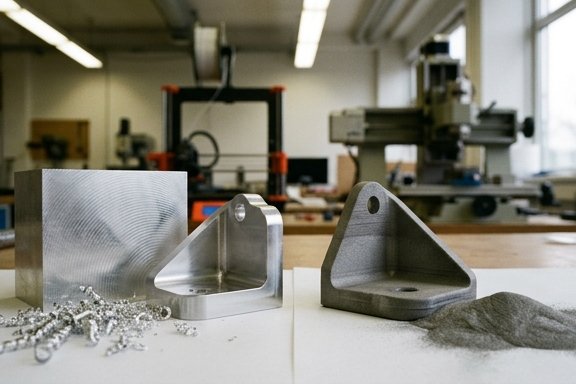
TL;DR: 3D print for complex geometry, early iteration, and runs under about 10 units. Go CNC for functional testing, tolerances tighter than ±0.05 mm, and production-grade material properties. For aluminum brackets, CNC usually overtakes SLS somewhere in the 25–50 unit range. And there’s a third option most people skip: print a near-net blank, then machine…
Read article
CNC Lathe Operations: Facing, Threading, Grooving

CNC Lathe Operations: Facing, Threading, Grooving

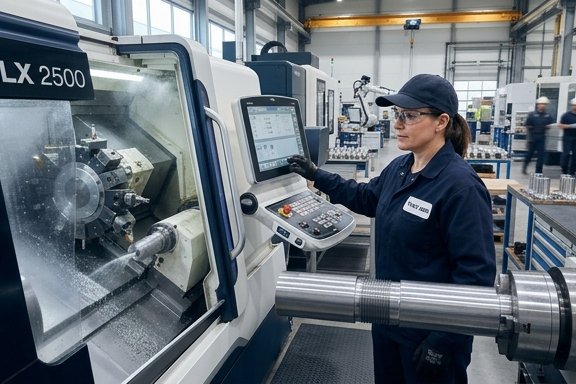
TL;DR: Facing squares the workpiece end using an outward-to-center or center-to-outward tool path. Threading cuts helical grooves using the G76 canned cycle with multiple infeed passes. Grooving plunges a narrow insert radially (G75) or axially (G74) to form recesses or part off. Each operation needs matched insert geometry and material-specific speeds and feeds. The Three…

Read article
CNC Turning vs Milling: Key Differences Explained

CNC Turning vs Milling: Key Differences Explained

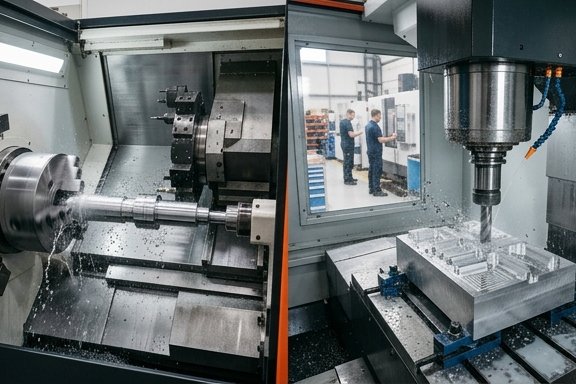
TL;DR: CNC turning rotates the workpiece against a stationary cutting tool and is optimal for cylindrical parts. CNC milling rotates the tool against a stationary workpiece and is optimal for prismatic geometry. Turning generally runs cheaper per hour, but combining both processes in a mill-turn machine cuts out the tolerance errors you get when a…

Read article
CNC Milling Tolerances: What Precision Can You Really Achieve?

CNC Milling Tolerances: What Precision Can You Really Achieve?

TL;DR: Standard CNC milling holds ±0.005″ (±0.125 mm) by default. A well-equipped shop can hit ±0.0005″ on specific features in forgiving materials. What you can actually achieve depends on feature geometry, material, and workholding, not the machine’s spec sheet. Spec tight tolerance only where function demands it. The Advertised vs. Achievable Tolerance Gap Shop capability…

Read article
How CNC Milling Works: A Complete Beginner's Guide

How CNC Milling Works: A Complete Beginner’s Guide

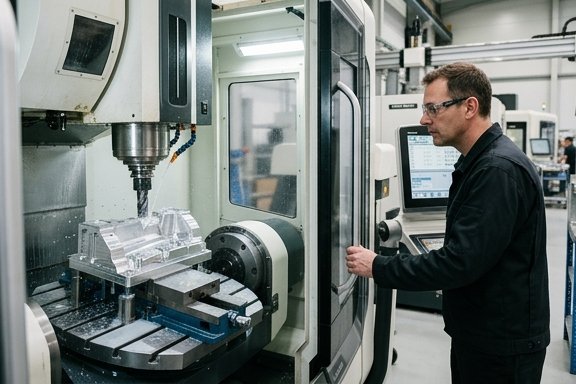
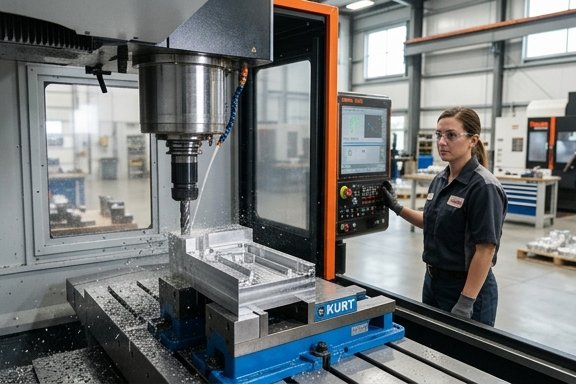
CNC milling is a subtractive process. A computer-controlled rotating cutter removes material from a stationary workpiece until what’s left is the part you wanted. The workflow goes CAD design → CAM toolpath → G-code → machine execution. A 3-axis mill handles most prismatic parts; complex geometry needs 4- or 5-axis machines. The CNC Milling Workflow…

Read article